In the future, all programs will be offered exclusively on a part-time basis. This step goes beyond the hospitality industry and sends a clear message to the entire Swiss educational landscape. The key question—one that applies not only to hotels, restaurants, and tourism businesses—is: How can skilled workers and managers receive continuing education without being taken out of the workforce for several years?
Learning and working at the same time—a model for the future
In the Swiss labor market, the issue of skilled labor shortages has been high on the agenda for years. According to the State Secretariat for Economic Affairs (SECO), Switzerland will face a shortage of over 110,000 qualified workers by 2025. Sectors such as hospitality, healthcare, IT, and skilled trades are particularly hard hit. Traditional full-time continuing education programs exacerbate the problem, as they often require a lengthy break from work.
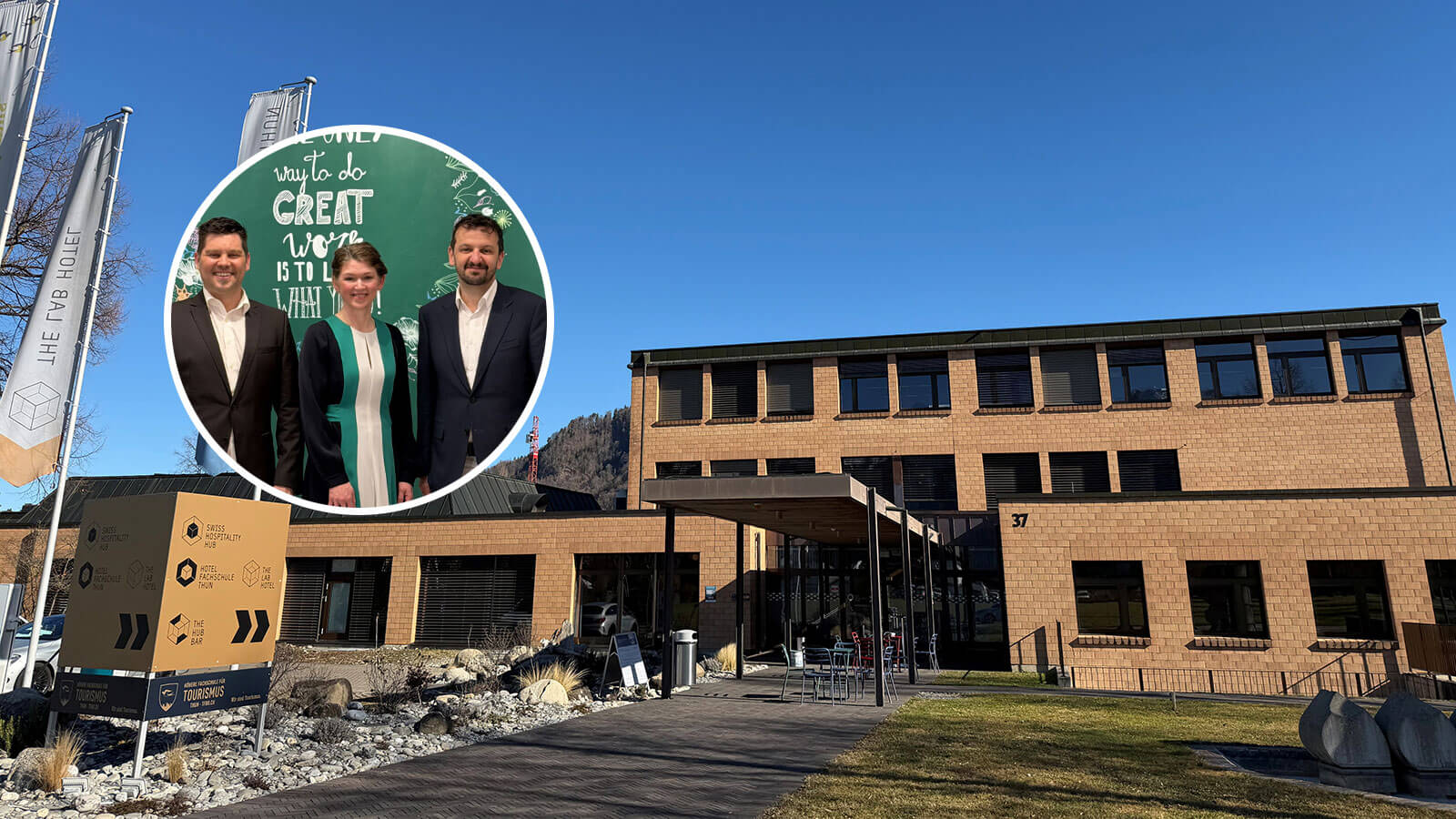
In contrast, the Thun Hotel Management School relies on a model of continuing education combined with work. Students remain employed throughout their entire program and typically work 50 to 70 percent of full-time hours. “The future of higher vocational education lies in combining learning and working,” explains Raphaël Gaudart, site manager and school director. “Qualified employees are needed now, not just after they graduate. Continuing education must be part of the solution and must not exacerbate the shortage of skilled workers.”
Benefits for Businesses and the Economy
For companies, this model provides immediate relief. Employees remain with the company, continually bring new knowledge to the workplace, and put it into practice right away. This enhances the internal transfer of know-how and boosts the company’s capacity for innovation.
Thun Hotel Management School
hfthun.ch